Information and reservations for the three total solar eclipses
The dates of the eclipses:
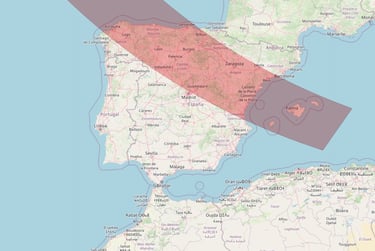
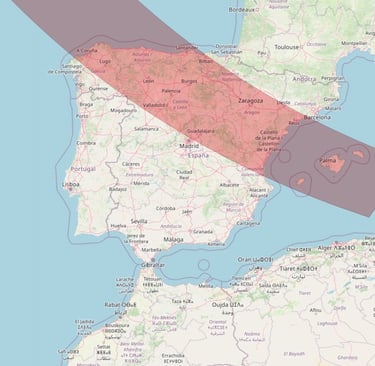
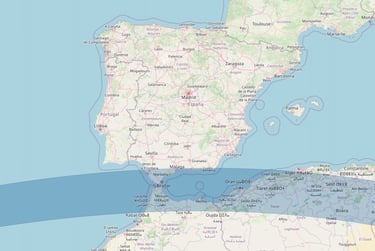
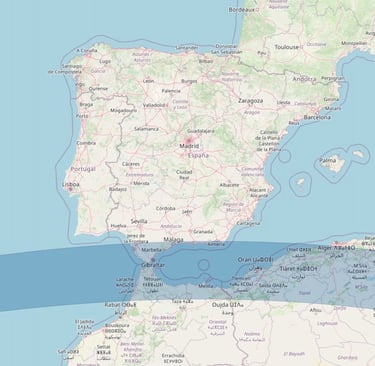
During the next three years, we will be able to see three total solar eclipses visible from different points in Spain.
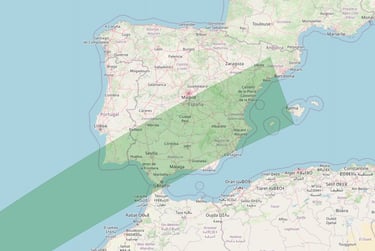
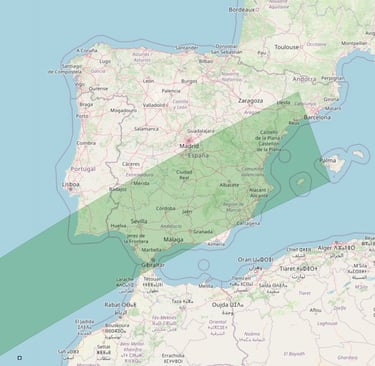
August 12, 2026: Total solar eclipse (red area)
August 2, 2027: Total solar eclipse (blue area)
January 26, 2028: Annular solar eclipse (green area)
These will be astronomical events of great national and international interest, and a massive influx of visitors from around the globe is expected. Amateur astronomers, photographers, and nature lovers will gather at the venues that various public and private entities are providing for these events.
How is a solar eclipse formed?
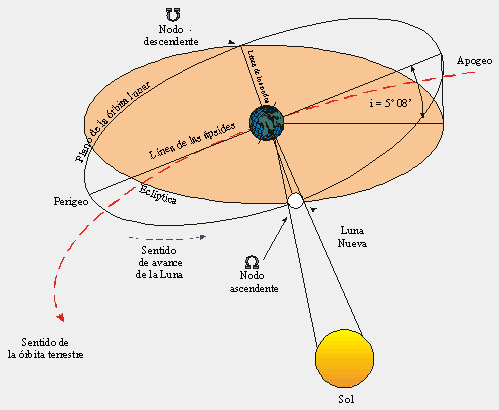
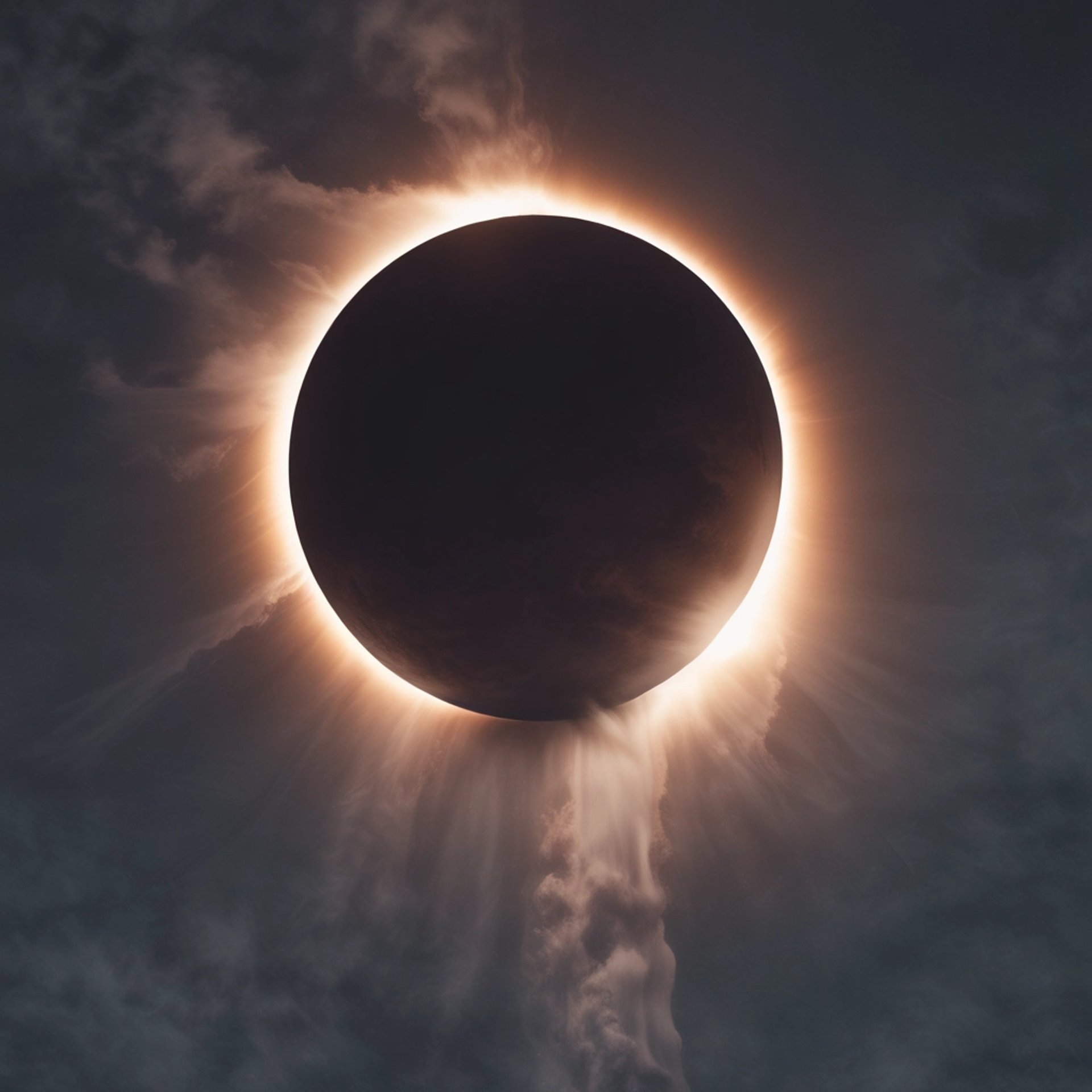
A solar eclipse occurs when the Moon passes between the Sun and the Earth, blocking the solar disk and casting a large shadow that darkens the day for a few minutes. If the solar disk is only partially covered, it is called a partial eclipse, but if it is completely covered, it is a total eclipse. An annular eclipse can also occur when the Moon appears smaller than the Sun because the Sun is closer to Earth, allowing only the outer ring of the Sun to be visible. Eclipses happen two or three times a year (visible from different locations) each time the Moon's orbit around the Earth intersects the node (point of intersection) of Earth's orbit around the Sun.
Necessary safety conditions:
To observe a solar eclipse directly (without optical instruments), ideal atmospheric conditions (completely clear skies) and adequate safety precautions are required. It is not advisable to make observations using photographic negatives, X-rays, or ordinary sunglasses. The only way to do so is by using certified eye protection that meets the ISO 12312-2 standard or a #14 welder's filter, and even then, direct exposure should be limited to a few seconds. Alternatively, you can use direct projection methods or follow the eclipse's progression using a video recorded directly from a telescope with special filter.
For observation with telescopes and/or binoculars, these must be protected with approved filters adapted and securely attached to the objective lens and never to the eyepiece , as these, due to their small size, could easily overheat and break.
The day of the eclipse:
At "astronomíaporuntubo," we've designed a variety of activities and workshops so you can enjoy this event with your family and friends in complete safety and comfort. We've also chosen the location: it will be in the Sierrra de la Demanda (Burgps), where we can make unobstructed observations. Among other things, we've prepared:
Direct observation of the Sun with the provided approved glasses, by projection and also "in streaming".
Solar seminarin several shifts so you can observe with our telescopes adapted with special filters, the star, its spots, striations and granulations.
A 2.5-hour starry night session in which, guided by our star experts, you can take a tour of the celestial vault and observe planets and deep space objects with computerized reflecting telescopes.
Possibility of free camping under the stars with a small tent, family tent, camper or caravan.
Make your decision and request your reservation in advance, as there is limited capacity and due to the nature of the event there will be demand for registration in the coming months.
In the purchase area, you can find out about the different registration options and what each one includes.
for the next eclipse (2026)