astronomíaporuntubo
Follow us on Instagram

home
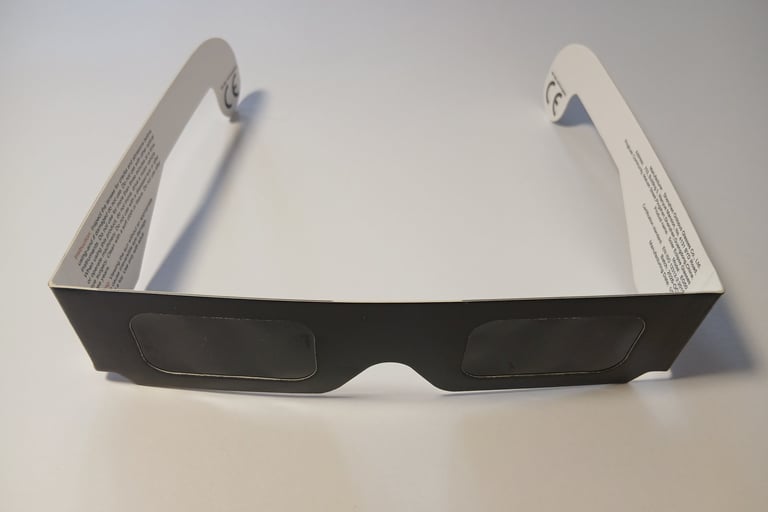
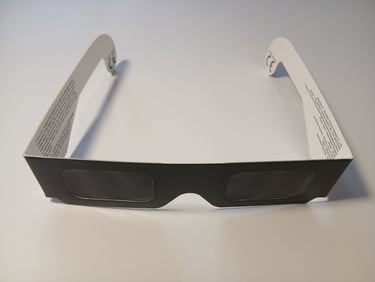
Get here your certified glasses to view the trio of eclipses
All our eclipse glasses are certified to the ISO12312-2:2015 standard and checked one by one for possible manufacturing defects.
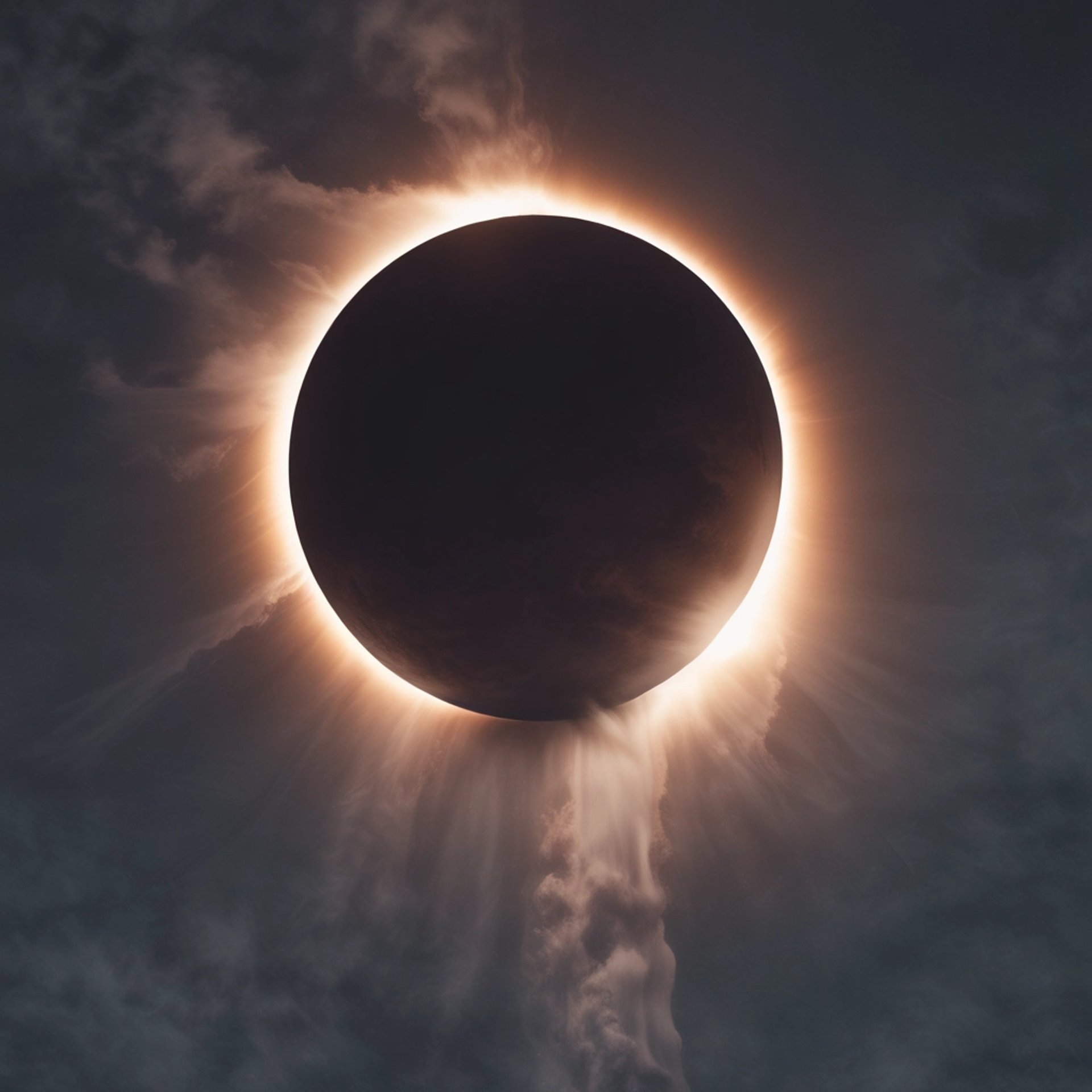
Explore with us the most spectacular astronomical event: a total solar eclipse
At "astronomíaporuntubo," we are preparing a complete astronomic evening so you can enjoy this event with your family and friends in complete safety and comfort. We've also chosen the location: it will be in the Geoparque "Las Loras" (Burgos), where we can make observations and more activities. Among other things, we've prepared:
*Narrated and commented viewing of the eclipse from the initial phase, with our certified glasses, also by projection and "online"
*Solar seminarin several shifts so you can observe with our telescopes adapted with special filters, the star, its spots, striations and granulations.
*A 2.5-hour starry night session in which, guided by our star experts, you can take a tour of the celestial vault and observe planets and deep space objects with computerized reflecting telescopes.
*Free camping under the stars with a small tent, family tent, camper or caravan.
*In addition: reserved access for astronomy and/or photography professionals, the possibility of reserving chairs, food included (depending on registration), discounts for large families...
Make your decision and request your reservation in advance, as there is limited capacity and due to the nature of the event there will be demand for registration in the coming months.
In the purchase area, you can find out about the different registration options and what each one includes.
for the next eclipse
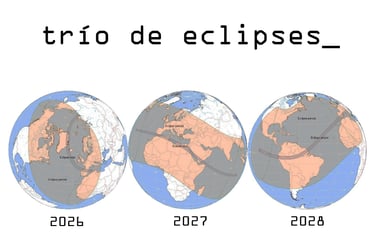
A trio of eclipses:
Come and enjoy one of nature's most spectacular events: a solar eclipse. And in Spain, we're in for a treat, astronomically speaking, as there will be three solar eclipses in 2026, 2027, and 2028. Each one will be visible from different locations across the country. The next one visible from northern Spain will occur during sunset on August 12, 2026.
The dates of the eclipses:
During the next three years, we will be able to see two total solar eclipses and one anular eclipse visibles from different points in Spain.
August 12, 2026: Total solar eclipse (red area)
August 2, 2027: Total solar eclipse (blue area)
January 26, 2028: Annular solar eclipse (green area)
These will be astronomical events of great national and international interest, and a massive influx of visitors from around the globe is expected. Amateur astronomers, photographers, and nature lovers will gather at the venues that various public and private entities are providing for these events.
From this link you can obtain detailed information about this astronomical phenomenon (information provided by the National Astronomical Observatory)
How is a solar eclipse formed?
A solar eclipse occurs when the Moon passes between the Sun and the Earth, blocking the solar disk and casting a large shadow that darkens the day for a few minutes. If the solar disk is only partially covered, it is called a partial eclipse, but if it is completely covered, it is a total eclipse. An annular eclipse can also occur when the Moon appears smaller than the Sun because the Sun is closer to Earth, allowing only the outer ring of the Sun to be visible. Eclipses happen two or three times a year (visible from different locations) each time the Moon's orbit around the Earth intersects the node (point of intersection) of Earth's orbit around the Sun.
Why is the eclipse of August 12, 2026, unique?
There are several reasons why this year's eclipse in Spain is unique and shouldn't be missed:
1. It will only be visible from Spain and a small region of Iceland, putting us in the global spotlight.
2. It will be a total eclipse, and the totality phase could last up to 2 minutes. During that time, day will turn into night, and animals will go to sleep...
3. It will happen almost at sunset, so we will have two sunsets very close together.
4. It is the first eclipse in Spain in 120 years. The last total solar eclipse visible in Spain was in 1905.
5. It takes place in August, during the holiday season, with warm and clear skies, family time...
6. It coincides with the peak of the Perseid meteor shower, the most anticipated of the year due to its intense activity.
7. The eclipse of August 12th belongs to Saros Series 126. This series had its first eclipse on March 10, 1179, and will end on May 3, 2459. It is a series composed of 72 eclipses over a period of 1280 years. This eclipse is the 48th in the series.
Necessary safety conditions:
To observe a solar eclipse directly (without optical instruments), ideal atmospheric conditions (completely clear skies) and adequate safety precautions are required. It is not advisable to make observations using photographic negatives, X-rays, or ordinary sunglasses. The only way to do so is by using certified eye protection that meets the ISO 12312-2 standard or a #14 welder's filter, and even then, direct exposure should be limited to a few seconds. Alternatively, you can use direct projection methods or follow the eclipse's progression using a video recorded directly from a telescope with special filter.
For observation with telescopes and/or binoculars, these must be protected with approved filters adapted and securely attached to the objective lens and never to the eyepiece.
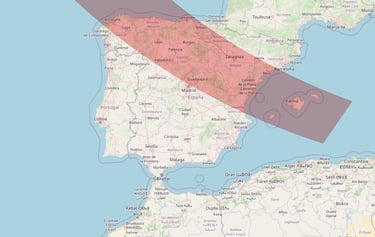
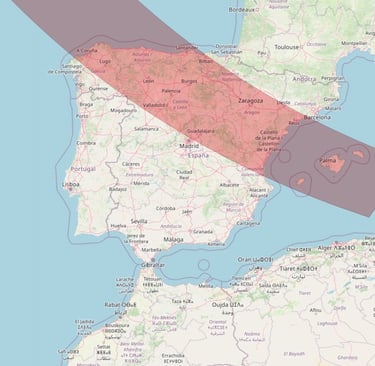
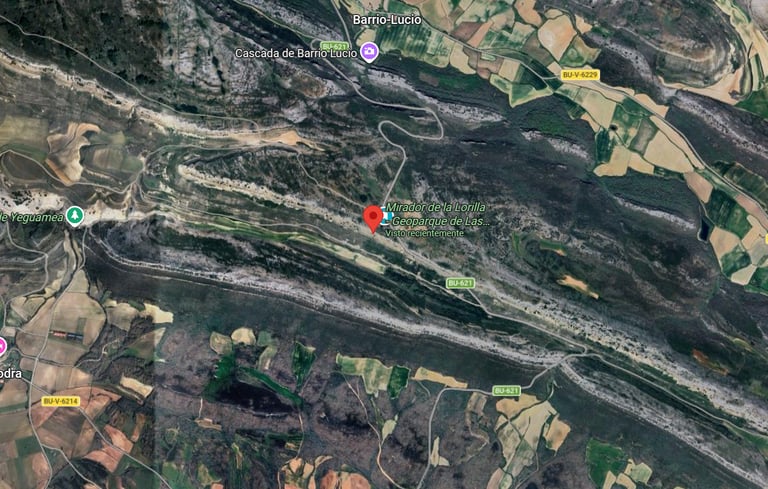
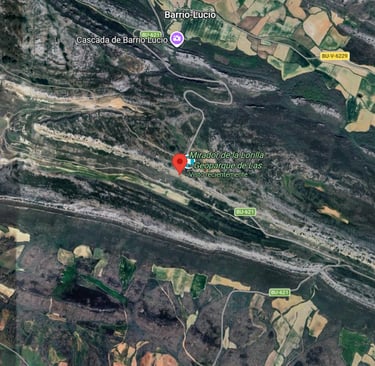
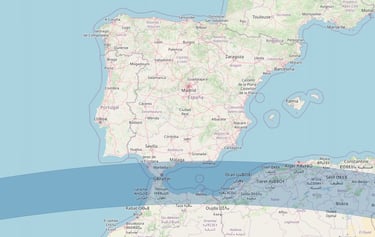
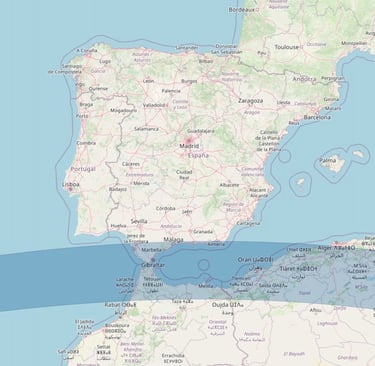
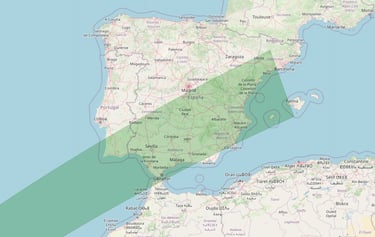
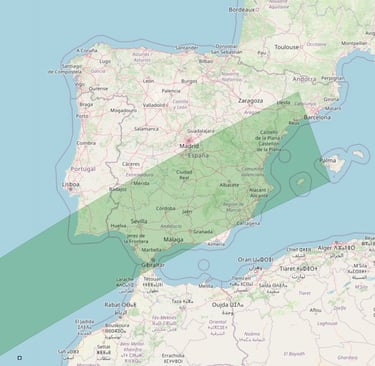
Zones of 2026, 2027 and 2028 eclpises in spain
12 august event site map
Sign up for "star Fridays"!
As the autumn-winter season begins, we at "astronomíaporuntubo" want to bring the night sky to all the residents of Burgos.
Our meetings will take place on Fridays of each week during the months of June - July and we will set up our equipment in the Juarros region (Starlight zone since 2023), 20 km from Burgos where we will begin to observe the celestial vault, the Moon, the planets and all the deep space objects available on each date.
The sky of the month (visible from Spain)
Information provided by the magazine " ASTRONOMY "
Downloads
Sundial
Sundial template ready to print (white cardstock recommended), cut out and assemble. Follow the instructions for use.
Celestial planisphere
"astronomíaporuntubo" planisphere to print on cardstock, cut out, and assemble. Follow the instructions for use.
Celestial planisphere
Selenoscope
"astronomíaporuntubo" selenoscope to print on cardstock, cut out, and assemble. Follow the instructions for use.
Videos on Youtube
en Instagram...

100% electric mobility
In line with our philosophy of sustainability and respect for the environment, we have committed to 100% electric mobility, acquiring a new vehicle for transporting our teams and clients. In short: 0 CO2 emissions, 0 noise pollution, and efficient and safe driving. Thank you to everyone who has supported us in this new investment!
Contributors:






+34632136117 (also Whatsapp)
©2026 astronomiaporuntubo. All rights reserved
info@astronomiaporuntubo.com